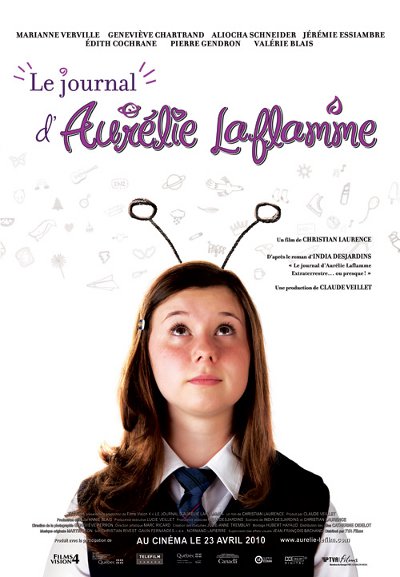
Journal d’Aurélie Laflamme, Le – Film de Christian Laurence

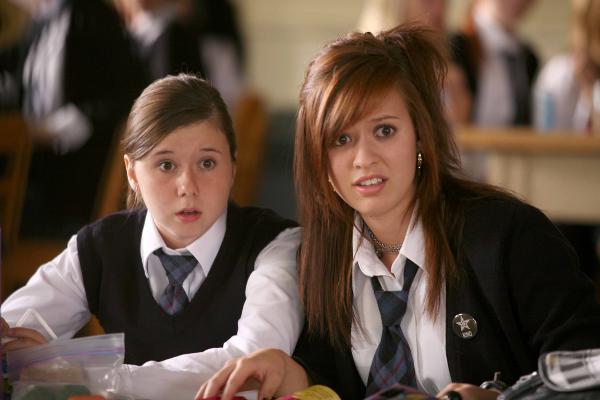
Le Journal d’Aurélie Laflamme est une comédie pour adolescents dont le personnage principal est tiré de la populaire série de livres écrits par l’auteure India Desjardins.

Le journal d’Aurélie Laflamme de Christian Laurence

Le journal d’Aurélie Laflamme de Christian Laurence

Le Journal d’Aurélie Laflamme est une comédie pour adolescents dont le personnage principal est tiré de la populaire série de livres écrits par l’auteure India Desjardins. Ce film est basé sur le premier tome de la série « Aurélie Laflamme, Extraterrestre ou presque ». Le réalisateur Christian Laurence vient du domaine de la télévision et signe ici son premier long-métrage de cinéma.

Comme on pouvait s’en douter d’après les succès obtenus par les livres, Le Journal d’Aurélie Laflamme fut reçu chaleureusement par le jeune public québécois qui en fit l’un des succès au box office de 2010. Au niveau international, le film de Christian Laurence eut droit à quelques sélections dans les festivals francophones, sans toutefois se démarquer outre mesure.

Un second film tiré des aventures d’Aurélie Laflamme a été produit par la suite.

Résumé

Aurélie est une adolescente de 14 ans, un peu perdue et donc en quête de solutions. Entre les habitudes de sa mère sédentaire et les chicanes avec sa meilleure amie, elle rêve à son premier french kiss ! Mais au fond, Aurélie se sent bien seule dans l'’univers, surtout depuis la mort de son père, il ya 5 ans.

Et si son père était simplement un extraterrestre, ayant quitté la Terre pour rejoindre sa planète? Génétique oblige, Aurélie serait elle-même une extraterrestre! Ceci expliquerait bien des choses. Par exemple, pourquoi elle se sent si différente des autres (surtout de sa mère), pourquoi elle n'’est pas capable d’'enligner deux mots sans faire une gaffe, et surtout pourquoi les garçons lui tapent vraiment sur les nerfs.

Synopsis officiel

Distribution

Marianne Verville (Aurélie Laflamme) ; Geneviève Chartrand (Kat) ; Aliocha Schneider (Nicolas) ; Jérémie Essiambre (Truch) ; Edith Cochrane (mère d’Aurélie) ; Pierre Gendron (Denis Beaulieu) ; Valérie Blais (Marie-Claude) ; Sylvie Potvin (Soeur Rose)

Fiche technique

Genre: Comédie dramatique - Origine: Québec, 2009 - Sortie en salles: 23 avril 2010 dans 83 salles au Québec - Durée: 1h48 - Classement: Général - Tournage: septembre-octobre 2009 - Budget approximatif: 4,1 M$

Réalisation : Christian Laurence - Scénario : Christian Laurence et India Desjardins, d'après le roman éponyme d'India Desjardins - Production : Claude Veillet et Lucie Veillet - Société de production : Films Vision 4 - Distribution : TVA Films

Équipe technique - Costumes : Julie-Anne Tremblay - Direction artistique : Marc Ricard - Montage : Hubert Hayaud - Musique : Martin Léon - Photographie : Geneviève Perron
Indian culture is one of the world's oldest and most multifaceted, characterized by a deep-rooted sense of spirituality, diverse customs, and collective values. This guide explores the core principles, daily habits, and evolving lifestyles that define modern India. Core Values and Social Fabric

As the sun set over the Marine Drive promenade, thousands of people sat on the edge of the sea. There were families sharing tiffins, tech bros arguing about stocks, and lovers whispering in the shadows of the streetlamps.

Reclamation: Modern creators are actively working to flood search engines with authentic, nuanced representations of South Asian life to combat these narrow algorithms. The Economic Power of the Desi Demographic

To live the Indian lifestyle is to master the art of jugaad—a Hindi word for a frugal, creative, workaround. It is to accept that the power will go out, but the conversation will not stop. It is to know that your train will be late, but the chaiwala (tea seller) at the platform will know exactly how you take your tea. It is to navigate a million unwritten social rules while finding infinite space for individual joy. The knot of Indian culture is indeed unending, but it is not a knot of strangulation. It is a knot of connection—tying the past to the future, the individual to the cosmos, the sacred to the everyday. And it is in this beautiful, messy, profound knot that a billion people find not just a way of life, but a way of being.

Spirituality: The birthplace of Hinduism, Buddhism, Jainism, and Sikhism [4, 5].

The most profound shift in lifestyle content isn't happening in Mumbai or Delhi—it’s in Tier-2 and Tier-3 cities.

If "xxxx" was meant for a specific niche (e.g., "Desi Wedding Trends" or "Desi Vegan Recipes"), replace the general sections with specific advice on those topics. Add Visuals:

Nature-First Living: Content focusing on urban "forest walks," corporate sound baths, and sustainable, plastic-free home innovations is gaining massive traction. 3. The Rise of the Regional Voice

From streaming giants investing in regional Indian content to global fashion brands launching Diwali collections, the commercial viability of the "Desi" tag is undeniable. Embracing the Future of South Asian Identity